
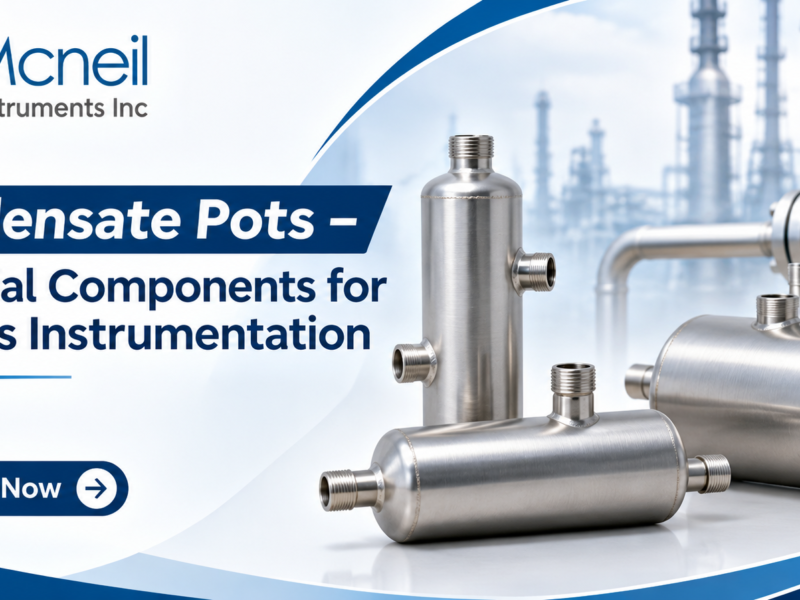
Accurate pressure measurement is essential for maintaining safety, efficiency and operational reliability in industrial process systems. In industries such as oil and gas, petrochemicals, power generation and chemical processing, pressure instruments are frequently exposed to demanding operating conditions. When measuring steam, vapour or other condensable process fluids, proper instrument protection becomes particularly important. This is where Condensate Pots play a significant role.
At Mcneil Air Header, we understand the importance of reliable instrumentation accessories in maintaining measurement accuracy and protecting sensitive instruments. Condensate pots are designed to create a consistent liquid seal in impulse lines, helping prevent direct contact between hot process steam and pressure instruments.
What Are Condensate Pots?
Condensate pots are specialized pressure-containing components installed in instrument impulse lines, primarily in steam and other condensable vapour applications. They help collect and maintain condensate within the impulse line, creating a liquid barrier between the process medium and the connected pressure measurement instrument.
These components are commonly installed in differential pressure measurement systems, pressure transmitters and other instrumentation arrangements where maintaining a stable liquid column is important.
By ensuring that both impulse lines maintain appropriate condensate levels, condensate pots help support reliable pressure measurement and reduce the risk of exposing instruments directly to high-temperature steam.
Why Are Condensate Pots Important in Process Instrumentation?
In steam applications, direct exposure to high-temperature process media can affect pressure instruments and their measurement performance. Condensate pots help address this challenge by maintaining a liquid-filled impulse line.
Here are some important reasons why condensate pots are used:
- Protect Pressure Instruments
Condensate pots help isolate sensitive pressure instruments from direct contact with high-temperature steam by maintaining a liquid seal in the impulse lines. - Support Accurate Pressure Measurement
In differential pressure measurement applications, properly installed condensate pots help maintain consistent liquid columns in both impulse lines, supporting stable and reliable readings. - Maintain Consistent Condensate Levels
They provide a defined collection point for condensate, helping maintain a suitable liquid level in the instrument connection arrangement. - Improve Instrument Reliability
By reducing direct exposure to hot steam and supporting stable impulse-line conditions, condensate pots help protect connected instrumentation. - Support Industrial Process Safety
Reliable pressure measurement is important for monitoring industrial processes. Properly designed and installed condensate pots contribute to dependable instrumentation arrangements.
Working Principle of Condensate Pots
The working principle of a condensate pot is based on collecting and maintaining condensate within an instrument impulse line.
In steam pressure measurement systems, the process steam enters the impulse line and gradually condenses as it loses heat. The condensate pot provides a chamber where this liquid can accumulate and establish a stable liquid column.
In differential pressure applications, two condensate pots are generally installed at the same elevation, one on each impulse line. This arrangement helps maintain balanced liquid head conditions on both sides of the differential pressure transmitter.
When correctly installed, filled, vented and maintained, the system helps minimize measurement errors caused by unequal condensate levels.
The installation arrangement must follow the instrument manufacturer’s recommendations and the applicable process engineering requirements.
Types of Condensate Pots Used in Industrial Applications
Condensate pots are available in different designs and configurations depending on process requirements, operating pressure, temperature and installation arrangements.
- Single Condensate Pot
A single condensate pot is used in suitable pressure measurement applications where one impulse line requires a condensate collection chamber. - Dual Condensate Pots
Dual condensate pots are commonly used in differential pressure measurement systems. Two pots are installed at matching elevations to help maintain balanced condensate columns. - Vertical Condensate Pots
Vertical condensate pots are designed for installations where a vertical chamber arrangement is preferred. They provide a collection volume for condensate within the impulse line. - Customized Condensate Pots
Customized designs can be considered according to project-specific requirements, including connection sizes, materials, dimensions, pressure ratings and mounting arrangements.
Materials Used in Condensate Pots
Material selection is an important consideration when choosing condensate pots for industrial instrumentation systems. The selected material should be compatible with the process fluid, operating pressure, temperature and environmental conditions.
Common material options include:
Carbon Steel: Used in suitable general industrial and steam applications.
Stainless Steel 304: Provides corrosion resistance for compatible operating environments.
Stainless Steel 316: Offers improved corrosion resistance, particularly in environments where molybdenum-containing stainless steel is preferred.
Alloy Steel: Considered for specific high-temperature and pressure requirements.
Other Special Alloys: Selected for demanding chemical and corrosive process environments.
The final material grade should always be determined by the project specification and process conditions.
Key Applications of Condensate Pots Across Industries
Condensate pots are widely used in industrial facilities where steam pressure and differential pressure measurements require reliable impulse-line arrangements.
- Oil and Gas Industry
In oil and gas processing facilities, condensate pots are used in suitable steam and vapour measurement systems to support dependable pressure monitoring and instrument protection. - Power Generation Plants
Power plants use steam extensively in boilers, turbines and associated process systems. Condensate pots help maintain liquid-filled impulse lines in steam pressure measurement applications. - Petrochemical Industry
Petrochemical plants operate complex process systems involving high temperatures and pressure. Condensate pots support instrumentation arrangements used for monitoring these processes. - Chemical Processing Plants
Chemical manufacturing facilities use pressure measurement instruments across various process lines. Condensate pots can be installed where condensable vapours require liquid-sealed impulse lines. - Refineries
Refineries use condensate pots in selected steam and process instrumentation applications to help maintain reliable differential pressure and pressure measurement.
Important Factors to Consider When Selecting Condensate Pots
Choosing the right condensate pot requires careful evaluation of the process and instrumentation requirements. The following factors should be considered before selecting a product:
Operating Pressure: The condensate pot must be suitable for the maximum operating and design pressure.
Operating Temperature: Material and design selection should account for the process temperature.
Material Grade: Choose materials compatible with the process fluid and operating environment.
Connection Type: Consider the required threaded, socket weld or other specified connections.
Dimensions and Capacity: Chamber dimensions and internal volume should meet the instrumentation design requirements.
Mounting Arrangement: Ensure the design supports correct installation and alignment.
Project Specifications: Confirm compliance with applicable engineering standards and customer requirements.
Installation and Maintenance of Condensate Pots
Correct installation is essential for achieving reliable performance from condensate pots. Incorrect positioning or unequal liquid levels can introduce measurement errors, particularly in differential pressure applications.
Some important installation and maintenance considerations include:
Install dual condensate pots at the same elevation wherever required by the instrument design.
Ensure impulse lines are routed correctly according to the approved instrumentation drawings.
Fill and vent the impulse lines and condensate pots according to the commissioning procedure.
Check all connections for leakage before commissioning.
Inspect the system periodically for corrosion, blockage and unwanted condensate accumulation.
Follow manufacturer recommendations and plant maintenance procedures.
Regular inspection helps identify potential issues before they affect instrumentation performance.
Why Choose Mcneil Air Header for Condensate Pots?
Selecting a dependable instrumentation accessories supplier is important for maintaining the reliability of industrial process systems. At Mcneil Air Header, we focus on providing instrumentation products designed to support demanding industrial applications.
Our commitment includes:
Condensate pots for industrial instrumentation applications.
Material options according to project requirements.
Different sizes and connection configurations.
Customized solutions based on technical specifications.
Quality-focused manufacturing and supply.
Support for oil and gas, petrochemical, power generation and process industries.
Assistance with domestic and international project requirements.
We understand that every industrial project has different instrumentation requirements. Our team focuses on helping customers identify suitable products based on their technical specifications.
Conclusion
Condensate pots are essential components in many steam pressure and differential pressure measurement arrangements. By maintaining condensate-filled impulse lines, they help protect sensitive instruments from direct exposure to high-temperature steam and support stable measurement conditions.
From power generation plants and refineries to petrochemical and chemical processing facilities, properly selected condensate pots contribute to reliable process instrumentation.
At Mcneil Air Header, we are committed to supplying quality-focused instrumentation accessories that meet industrial requirements. Contact our team to discuss your condensate pot requirements and find suitable solutions for your process instrumentation systems.
Looking for Reliable Condensate Pots for Your Process Instrumentation?
Choose Mcneil Air Header for quality-focused instrumentation accessories designed for demanding industrial environments. We support customized condensate pot requirements based on material, dimensions, connections and project specifications.
Get in touch with our team today to discuss your requirements and request a quotation.
Website: https://mcneilairheader.com/
Frequently Asked Questions (FAQs)
- What is a condensate pot in process instrumentation?
A condensate pot is a pressure-containing chamber installed in an instrument impulse line to collect and maintain condensate. It is commonly used in steam pressure and differential pressure measurement systems. - What is the main purpose of a condensate pot?
Its main purpose is to maintain a liquid seal in the impulse line, helping prevent direct contact between high-temperature steam and connected pressure instruments. - Where are condensate pots commonly used?
Condensate pots are commonly used in oil and gas plants, refineries, power generation facilities, petrochemical plants and chemical processing industries. - Why are two condensate pots used in differential pressure measurement?
Two condensate pots are generally used to maintain comparable liquid columns in the high-pressure and low-pressure impulse lines. Installing them at matching elevations helps minimize measurement errors caused by unequal liquid head. - Which materials are commonly used to manufacture condensate pots?
Common materials include carbon steel, stainless steel 304, stainless steel 316 and other alloy materials, depending on operating pressure, temperature and process compatibility. - Can condensate pots be customized?
Yes. Condensate pots can be designed or sourced according to project requirements, including material grade, chamber dimensions, connection type, pressure rating and mounting configuration. - What is the difference between a condensate pot and a steam trap?
A condensate pot is used in instrumentation impulse lines to collect and maintain condensate for pressure measurement arrangements. A steam trap automatically removes condensate from steam distribution systems while preventing significant steam loss. - How does a condensate pot protect a pressure transmitter?
It maintains a liquid-filled impulse line between the process and the pressure transmitter, reducing direct exposure to high-temperature steam. - How should condensate pots be installed?
Installation should follow approved instrumentation drawings and manufacturer recommendations. In differential pressure applications, dual condensate pots are generally positioned at the same elevation, with properly routed and filled impulse lines. - How often should condensate pots be inspected?
Inspection frequency depends on process conditions and plant maintenance schedules. Regular checks should cover leakage, corrosion, blockage, connections and condensate levels. - Are condensate pots suitable for high-pressure applications?
Yes, provided the condensate pot is specifically designed, manufactured and rated for the required pressure and temperature conditions. - Where can I find a condensate pot supplier for industrial applications?
Mcneil Air Header provides instrumentation product supply solutions for industrial applications. Contact our team with your material, size and pressure requirements to discuss suitable condensate pot options.