
Introduction
In modern industrial operations, maintaining accurate and reliable air distribution is essential for efficient instrumentation and process control. Air headers play an important role in distributing compressed air or instrument air to multiple equipment connections through a single, organised assembly. Designed for industrial reliability, precision-engineered air headers help ensure consistent airflow, operational safety, and simplified maintenance across various industrial applications.
Mcneil Air Header offers engineered air header solutions designed to meet diverse industrial requirements, providing dependable performance in demanding operating environments.
What Are Industrial Air Headers?
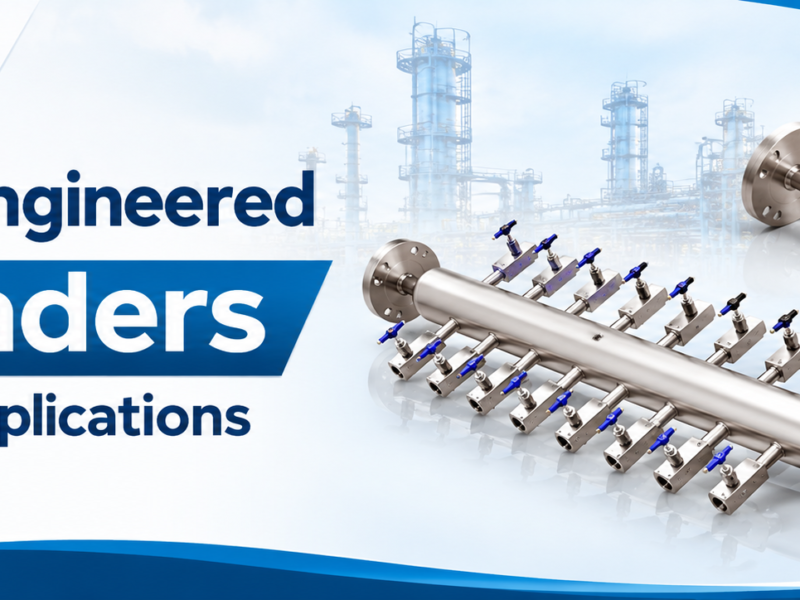
An air header is a distribution manifold designed to supply compressed air or instrument air to multiple outlets from a common inlet connection. It typically consists of a main pipe with multiple outlet connections, allowing several instruments or pneumatic devices to receive air from a central supply point.
Air headers are widely used in industries where reliable pneumatic operation and organised instrument air distribution are essential. They are available in different configurations, outlet arrangements, materials, and pressure ratings to suit specific application requirements.
Key Features of Precision-Engineered Air Headers
- Multiple Outlet Configurations:
Air headers are available in different outlet arrangements, including 2-way, 4-way, 6-way, 8-way, and other customised configurations to support multiple instrument connections. - Durable Construction:
Manufactured using suitable materials such as stainless steel and carbon steel, air headers are designed to withstand demanding industrial conditions. - Reliable Air Distribution:
Precision-engineered connections support efficient and organised instrument air distribution across multiple pneumatic devices. - Leak-Resistant Connections:
Proper machining, threading, and connection design help minimise leakage risks and maintain dependable system performance. - Easy Installation and Maintenance:
Compact designs and organised outlet arrangements simplify installation, inspection, and maintenance activities.
Common Industrial Applications of Air Headers
Air headers are essential components in several industrial sectors, including:
Oil & Gas Industry: Instrument air distribution for pneumatic instruments and control systems.
Petrochemical Plants: Supporting pneumatic equipment and process instrumentation.
Power Generation: Supplying instrument air to control valves and pneumatic systems.
Chemical Processing: Providing organised air distribution for process control applications.
Industrial Automation: Supporting pneumatic instruments and automated equipment.
Why Choose the Right Air Header?
Selecting the right air header is important for maintaining system efficiency, safety, and long-term reliability. Factors such as operating pressure, temperature, material compatibility, number of outlets, connection type, and installation requirements should be carefully evaluated.
A properly selected air header helps improve installation organisation, simplifies maintenance, and supports reliable instrument air distribution.
Why Choose Mcneil Air Header?
Mcneil Air Header focuses on providing industrial air header solutions designed for reliable performance and application-specific requirements. With attention to material selection, manufacturing precision, and product quality, Mcneil supports industries looking for dependable instrumentation and air distribution components.
Whether your requirement involves standard outlet configurations or customised air header assemblies, choosing the right engineering solution helps ensure consistent performance across industrial operations.
Conclusion
Precision-engineered air headers are essential for organised and reliable instrument air distribution in modern industrial facilities. From oil and gas plants to power generation and process automation, the right air header configuration supports operational efficiency and simplified maintenance.
Choose Mcneil Air Header for dependable industrial air header solutions designed to meet demanding application requirements.
Looking for precision-engineered air headers for your industrial applications?
Choose Mcneil Air Header for reliable air distribution solutions, quality construction, and application-specific configurations.
Visit: www.mcneilairheader.com
Contact Mcneil Air Header today for your industrial air header requirements!
Frequently Asked Questions (FAQs)
- What is an air header used for in industrial applications?
An air header distributes compressed air or instrument air from a common supply line to multiple pneumatic instruments and equipment connections. - Which materials are commonly used to manufacture air headers?
Air headers are commonly manufactured using stainless steel and carbon steel, depending on operating conditions and application requirements. - What outlet configurations are available in air headers?
Air headers are available in multiple configurations, including 2-way, 4-way, 6-way, 8-way, and customised outlet arrangements. - Which industries commonly use air headers?
Oil and gas, petrochemical, chemical processing, power generation, and industrial automation industries commonly use air headers. - How do I select the right air header?
Consider operating pressure, temperature, material, number of outlets, connection type, and compatibility with your instrumentation system. - Can air headers be customised?
Yes, air headers can be manufactured with customised outlet configurations, dimensions, materials, and connection requirements based on project specifications. - What is the importance of material selection in air headers?
Proper material selection helps ensure corrosion resistance, mechanical strength, durability, and compatibility with the operating environment.