
Introduction
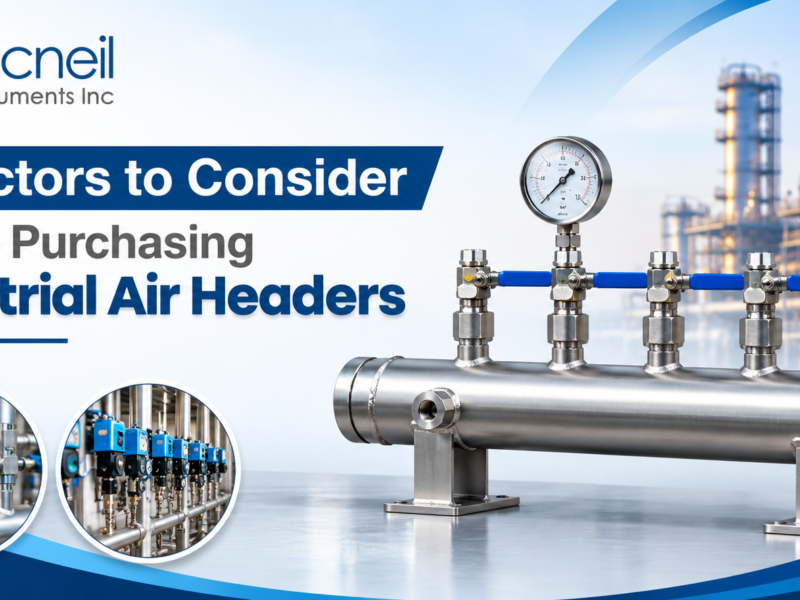
Industrial air headers play an important role in distributing compressed air efficiently across different equipment, machinery, and pneumatic systems. They are widely used in manufacturing plants, oil and gas facilities, petrochemical industries, power plants, process industries, and various industrial installations where a reliable compressed air supply is essential.
Selecting the right industrial air header is important for maintaining consistent air distribution, reducing pressure losses, improving operational efficiency, and ensuring long-term system reliability. Factors such as material selection, operating pressure, temperature, connection size, outlet configuration, and manufacturing quality directly influence the performance of an air header.
At Mcneil Air Header, we understand that every industrial application has different compressed air distribution requirements. Before purchasing an industrial air header, buyers should evaluate several technical and operational factors to ensure that the selected product meets their system requirements.
Here are 10 important factors to consider before purchasing industrial air headers.
Material Selection and Quality
Material selection is one of the most important considerations when purchasing an industrial air header. The material should be suitable for the operating environment, pressure conditions, temperature, and expected service life.
Common materials used in industrial air headers include:
Stainless Steel: Offers excellent corrosion resistance and is suitable for demanding industrial environments.
Carbon Steel: Commonly used in general industrial applications where strength and cost-effectiveness are important.
Alloy Steel: Suitable for applications requiring specific mechanical properties and resistance to demanding operating conditions.
The choice of material should be based on the application, compressed air quality, environmental conditions, and project specifications. Selecting the correct material helps improve durability and reduces the possibility of premature failure.
Operating Pressure Requirements
Before purchasing an air header, determine the maximum operating pressure of your compressed air distribution system.
Industrial air headers must be designed and manufactured to withstand the specified working pressure without compromising safety or performance.
Consider the following:
Normal operating pressure.
Maximum allowable working pressure.
Potential pressure fluctuations.
Design pressure requirements.
Applicable piping and pressure equipment standards.
Always ensure that the selected air header has an appropriate pressure rating for the intended application. Do not select a product based only on the pressure rating of the connected compressor.
Number of Outlet Connections
The number of outlet connections determines how many pneumatic devices, machines, or distribution lines can receive compressed air from the header.
Before ordering, calculate the number of required outlets based on your current installation and future expansion plans.
Consider:
Number of connected machines.
Required outlet spacing.
Outlet connection sizes.
Future additional connections.
Maintenance and accessibility requirements.
Choosing the correct outlet configuration helps maintain an organised compressed air distribution network and reduces the need for additional modifications.
Header Size and Dimensions
The overall dimensions of an industrial air header directly affect its installation, air distribution capacity, and compatibility with the existing piping network.
The header size should be selected based on the total compressed air demand, flow rate, operating pressure, and number of connected outlets.
Important dimensional considerations include:
Main header diameter.
Overall header length.
Outlet size and spacing.
Inlet connection dimensions.
Mounting and installation requirements.
An appropriately sized air header helps minimise unnecessary pressure drops and supports efficient compressed air distribution.
Connection Type and End Configuration
Industrial air headers are available with different connection arrangements depending on the piping system and installation requirements.
Common connection configurations include:
Flanged End Connections.
Threaded Connections.
Socket Weld Connections.
Butt Weld Connections.
Customised End Connections.
The connection type should be compatible with the existing piping system and project specifications. Properly selected connections help simplify installation, improve sealing reliability, and reduce the risk of leakage.
Corrosion Resistance and Environmental Conditions
Industrial air headers may operate in environments exposed to moisture, chemicals, humidity, dust, and changing temperatures.
Corrosion resistance becomes especially important in chemical processing plants, offshore installations, coastal facilities, and other demanding industrial environments.
When selecting an air header, consider:
Indoor or outdoor installation.
Exposure to moisture and humidity.
Chemical or corrosive environments.
Ambient temperature conditions.
Surface protection requirements.
Stainless steel air headers may be suitable for applications where corrosion resistance is a priority. However, the correct material grade should always be selected according to the actual environmental and service conditions.
Air Flow Capacity and Pressure Drop
An industrial air header should provide sufficient airflow to support all connected equipment without causing excessive pressure loss.
An undersized header can restrict airflow, increase pressure drop, and affect the performance of pneumatic equipment.
Before purchasing, evaluate:
Total compressed air consumption.
Required flow rate.
Main pipe diameter.
Number of outlet connections.
Distance between the compressor and equipment.
Expected pressure drop across the distribution system.
Proper sizing and configuration help maintain consistent air supply and improve overall system efficiency.
Manufacturing Standards and Quality Assurance
Manufacturing quality plays an important role in the safety, durability, and performance of industrial air headers.
Buyers should check whether the manufacturer follows the applicable engineering codes, material specifications, dimensional requirements, and project quality procedures.
Depending on the design and application, relevant requirements may include:
ASME B31.3 for applicable process piping systems.
ASME Section VIII for applicable pressure vessel designs.
ASTM material specifications.
Project-specific fabrication and inspection requirements.
It is important to understand that an air header’s applicable design code depends on its construction and intended service. Buyers should confirm the required code and inspection scope before placing an order.
Inspection, Testing, and Documentation
Quality inspection and testing help verify whether an industrial air header meets the required specifications.
Before finalising a purchase, ask the supplier about the availability of relevant inspection and quality documents.
These may include:
Material Test Certificates (MTC).
Dimensional Inspection Reports.
Welding Inspection Records, where applicable.
Non-Destructive Testing (NDT) Reports, where specified.
Pressure or leak test reports, as applicable.
Certificate of Conformity.
Inspection and Test Plan (ITP), where required.
Proper documentation supports quality verification, project approvals, traceability, and future maintenance activities.
Supplier Experience, Customisation, and After-Sales Support
Selecting the right supplier is just as important as selecting the right product. An experienced industrial piping supplier can help buyers identify suitable material grades, dimensions, connection configurations, and technical specifications.
Before placing an order, evaluate the supplier based on:
Experience in industrial piping products.
Material and grade availability.
Ability to meet customised requirements.
Product quality and inspection procedures.
Technical documentation support.
Delivery timelines.
Customer service and after-sales assistance.
Working with a reliable supplier helps reduce procurement challenges and supports smoother project execution.
Applications of Industrial Air Headers
Industrial air headers are used in several industries where compressed air needs to be distributed to multiple machines, instruments, and pneumatic systems.
Some common applications include:
Oil and Gas Industry: Used for distributing compressed air to pneumatic equipment and supporting utility air systems.
Petrochemical Plants: Used in compressed air distribution networks for process-related equipment and pneumatic applications.
Manufacturing Industries: Supply compressed air to production machinery, pneumatic tools, and automated equipment.
Power Generation Plants: Support compressed air distribution for various plant utility and instrumentation applications.
Chemical Processing Plants: Used in pneumatic systems where reliable compressed air distribution is essential.
Pharmaceutical Industries: Support compressed air distribution systems, subject to the required air quality and contamination control specifications.
Why Choose Mcneil Air Header for Industrial Air Headers?
At Mcneil Air Header, we understand the importance of reliable industrial piping components in maintaining efficient plant operations. We focus on supplying quality-oriented piping and instrumentation products to meet different industrial and project requirements.
Our team understands that air header requirements can vary depending on operating pressure, material grade, outlet configuration, connection type, and installation environment.
We assist customers with industrial air header requirements, including material selection, dimensional specifications, connection arrangements, and relevant product documentation, subject to project requirements.
Whether you are sourcing air headers for oil and gas, petrochemical, manufacturing, power generation, or process industries, Mcneil Air Header can assist you with your industrial piping requirements.
We serve customers across India and international markets, including the UAE, Saudi Arabia, and other GCC countries.
Conclusion
Purchasing the right industrial air header requires careful evaluation of material quality, operating pressure, airflow capacity, outlet configuration, dimensions, corrosion resistance, manufacturing standards, and supplier reliability.
A properly selected air header helps ensure efficient compressed air distribution, minimises unnecessary pressure losses, and supports dependable industrial operations.
At Mcneil Air Header, we believe that the right product selection and technical understanding are essential for successful industrial installations. Before placing your next order, evaluate these 10 factors to make a more informed purchasing decision.
Looking for Reliable Industrial Air Headers for Your Project?
Choose Mcneil Air Header for industrial piping and instrumentation product requirements.
We assist customers with air header specifications, material selection, outlet configurations, and customised requirements for different industrial applications.
Whether your project is in India, UAE, Saudi Arabia, or other international markets, our team is ready to assist.
Contact Mcneil Air Header today to discuss your requirements and request a quotation.
Website: https://mcneilairheader.com/
Frequently Asked Questions (FAQs)
- What is an industrial air header?
An industrial air header is a piping assembly designed to distribute compressed air from a main supply line to multiple outlet connections. It is commonly used in manufacturing plants, oil and gas facilities, and other industrial applications. - What materials are commonly used for industrial air headers?
Industrial air headers are commonly manufactured using carbon steel, stainless steel, and alloy steel, depending on operating conditions, environmental exposure, and project specifications. - How do I select the correct size of an air header?
The correct size depends on compressed air flow requirements, operating pressure, number of outlets, connected equipment, pipe length, and acceptable pressure drop. - What is the purpose of multiple outlets in an air header?
Multiple outlets allow compressed air to be distributed from a single main header to different machines, pneumatic equipment, and utility connections. - Which connection types are available for industrial air headers?
Common connection options include flanged, threaded, socket weld, and butt weld connections. The appropriate type depends on the piping arrangement and project requirements. - Are stainless steel air headers better than carbon steel air headers?
Stainless steel air headers generally offer better corrosion resistance, while carbon steel air headers can be a cost-effective option for suitable general industrial environments. The selection depends on operating and environmental conditions. - What documents should I request when purchasing an industrial air header?
Buyers should request relevant documents such as Material Test Certificates, dimensional inspection reports, welding records, NDT reports, pressure or leak test reports, and certificates of conformity, as applicable. - Can industrial air headers be customised?
Yes. Industrial air headers can be designed or configured according to project requirements, including header length, diameter, number of outlets, outlet spacing, material grade, and connection type. - Where are industrial air headers commonly used?
They are commonly used in oil and gas plants, petrochemical facilities, manufacturing units, power generation plants, chemical processing industries, and other facilities requiring compressed air distribution. - How can I choose a reliable industrial air header supplier?
Look for a supplier with industrial product experience, material options, technical knowledge, quality documentation, customisation capabilities, and reliable delivery support. - What is the difference between an air header and an air receiver?
An air header distributes compressed air to multiple outlets, whereas an air receiver is a pressure vessel used to store compressed air and help stabilise pressure within the system. They perform different functions in a compressed air network.