
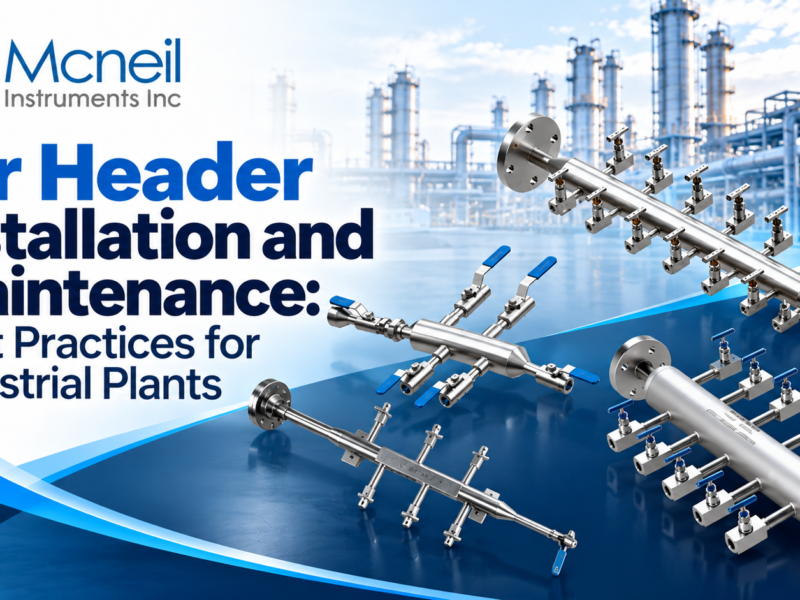
Air headers are essential components of industrial compressed air systems, providing a centralized distribution point for supplying compressed air to multiple instruments, pneumatic valves, actuators, and other equipment. They are widely used in manufacturing facilities, oil and gas plants, petrochemical industries, power plants, and process automation systems. Proper air header installation and regular maintenance help ensure reliable air distribution, minimize leakage, improve operational efficiency, and support the long-term performance of connected equipment.
For industrial plants that depend on compressed air for instrumentation and automation, even minor air distribution problems can affect productivity and process reliability. Incorrect installation, inadequate drainage, pressure drops, corrosion, and neglected maintenance can lead to equipment malfunctions and unnecessary operating costs. Following the right installation and maintenance practices helps prevent these issues and supports safe, efficient plant operations.
Mcneil Air Header understands the importance of reliable instrumentation components in industrial environments. This guide explores the key considerations for air header installation, routine maintenance procedures, common problems, and best practices for maintaining dependable compressed air distribution systems.
What Is an Air Header?
An air header is a distribution manifold designed to receive compressed air from a supply line and distribute it to multiple outlets. In instrumentation applications, air headers commonly supply instrument air to pneumatic control valves, actuators, positioners, and other air-operated devices.
Depending on the system design, an air header may include multiple outlet connections, isolation valves, mounting arrangements, drain points, and other accessories. The material, dimensions, pressure rating, and connection configuration depend on the application and the operating environment.
Air headers are particularly important in industrial facilities where several instruments are installed in a common area. Instead of providing a separate supply arrangement for every instrument, a properly designed header creates an organized distribution system that simplifies installation, isolation, and maintenance.
Importance of Proper Air Header Installation
Correct air header installation is essential for maintaining consistent air supply and minimizing problems throughout the pneumatic system. Poor installation can contribute to air leakage, pressure fluctuations, contamination, corrosion, and difficult maintenance access.
A properly installed air header helps maintain a stable supply of compressed air to connected instruments. This is particularly important in process industries where pneumatic control equipment plays a role in regulating pressure, temperature, flow, and other operating parameters.
Proper installation also improves accessibility for inspection and troubleshooting. Clearly identified connections and appropriately positioned isolation valves make it easier for maintenance personnel to inspect individual outlets without unnecessarily disturbing the entire distribution system.
In addition, suitable materials, correctly rated components, and appropriate installation procedures help improve the service life of the air header and reduce the likelihood of premature failures.
Best Practices for Air Header Installation
- Select the Right Air Header for the Application
Selecting an appropriate air header is the first step toward building a reliable compressed air distribution system. Before installation, evaluate the operating pressure, temperature, number of outlets, required air flow, connection sizes, and environmental conditions.
The selected air header should be compatible with the intended instrument air system and meet the applicable pressure and material requirements. Material selection should also account for moisture exposure, corrosion risks, and the surrounding industrial environment.
Stainless steel may be appropriate for applications requiring enhanced corrosion resistance, while other approved materials may be suitable for less demanding conditions. The final choice should be based on the engineering specification rather than material preference alone.
For industrial instrumentation applications, Mcneil Instrument can help customers evaluate air header options according to their project requirements.
- Verify the Installation Location
The installation location directly affects accessibility, safety, and maintenance efficiency. Air headers should be positioned where technicians can easily inspect connections, operate isolation valves, and perform routine servicing.
Avoid locations exposed to unnecessary mechanical damage, excessive vibration, extreme temperatures, or environmental conditions beyond the component’s design limits.
Where possible, install the air header in a clean, accessible area that allows sufficient clearance for connecting tubing, operating valves, and carrying out inspections. The arrangement should also minimize unnecessary tubing lengths and avoid obstructing nearby equipment.
Before mounting, verify that the selected location meets the plant layout requirements and does not interfere with equipment operation or emergency access.
- Check Mounting and Mechanical Support
Proper mounting helps prevent unwanted movement, vibration-related stress, and excessive loads on connections. The air header should be secured using an appropriate support arrangement designed for its size, weight, operating conditions, and installation orientation.
Ensure that the mounting structure can support the assembly and any loads imposed by connected tubing or accessories. Avoid using the header itself as a support for unrelated equipment.
During installation, check alignment and confirm that connected tubing does not place excessive bending or mechanical stress on the outlet connections. Where vibration is present, assess whether additional support or vibration-control measures are necessary.
Following the manufacturer’s installation instructions helps reduce the risk of mechanical damage and connection failure.
- Ensure Correct Connections and Leak-Free Joints
Air leakage is one of the most common sources of inefficiency in compressed air systems. Improperly installed fittings, damaged threads, incorrect sealing materials, and loose connections can cause leakage and reduce the available air supply.
Before connecting the air header, inspect all connection points for damage, contamination, and dimensional compatibility. Use fittings and sealing methods appropriate for the connection type, material, pressure rating, and service conditions.
Tighten connections according to the manufacturer’s instructions. Avoid excessive tightening, which can damage threads or sealing surfaces.
After installation, perform an appropriate leak test using a method approved for the system’s operating conditions. Repair any identified leaks before placing the equipment into normal service.
- Maintain Clean and Dry Instrument Air
Air quality is a critical factor in the performance of pneumatic instruments. Moisture, oil, particulates, and other contaminants can affect control valves, positioners, actuators, and other air-operated equipment.
Before commissioning the air header, ensure that the upstream compressed air or instrument air supply meets the cleanliness, pressure, and dew-point requirements specified for the connected equipment.
Use suitable filtration, drying, and moisture-management equipment where required by the system design. Drain points should be provided where appropriate, and condensate should be managed according to the plant’s procedures.
During installation, prevent dirt, metal particles, thread sealant, and other foreign materials from entering the header or connected tubing. Cleanliness is particularly important when working with precision instrumentation.
- Verify Pressure and Flow Requirements
The air header must provide sufficient air to all connected instruments under the expected operating conditions. An undersized header, inadequate supply pressure, excessive demand, or restrictive connections can contribute to pressure drops and unreliable equipment operation.
Before commissioning, verify that the header’s design pressure and connection configuration match the system requirements. Consider the number of connected devices, their air consumption, simultaneous demand, and the capacity of the upstream supply.
Pressure measurements at suitable points can help confirm that the distribution system operates within the specified limits. Any pressure drop that exceeds the design allowance should be investigated before the system is accepted for service.
Never exceed the rated pressure or temperature limits of the air header, fittings, valves, or connected components.
- Label Connections and Provide Isolation
Clear identification improves operational efficiency and helps maintenance teams locate the correct outlet during troubleshooting.
Where appropriate, label outlet connections according to the plant’s instrument identification system. Maintain accurate drawings and documentation showing the header arrangement, connected instruments, isolation points, and relevant specifications.
Isolation valves can help maintenance personnel isolate selected branches when the system design permits. Before disconnecting or servicing any component, follow the plant’s approved isolation, depressurization, and lockout/tagout procedures.
Good identification and isolation practices help reduce maintenance errors and support safer working conditions.
Air Header Maintenance Best Practices
Regular maintenance helps preserve air distribution reliability, detect developing faults, and extend equipment service life. The maintenance schedule should reflect the manufacturer’s recommendations, operating conditions, air quality, and plant maintenance procedures.
- Conduct Routine Visual Inspections
Inspect the air header and associated fittings at planned intervals. Look for visible leakage, corrosion, damaged connections, loose supports, unusual vibration, physical deformation, and signs of contamination.
Pay particular attention to areas exposed to moisture, chemicals, high temperatures, or mechanical impact. Any sign of deterioration should be assessed to determine whether corrective action is required.
Document inspection findings and track recurring problems. A consistent inspection process makes it easier to identify patterns before they develop into more serious operating issues.
- Check for Air Leaks
Air leaks can increase compressor workload, waste energy, and reduce the pressure available to connected equipment. Periodically inspect joints, fittings, valves, tubing connections, and other potential leakage points.
Use an approved leak-detection method suitable for the installation. Where leakage is detected, identify the source and repair it using the correct replacement parts and procedures.
Do not tighten or repair pressurized connections unless the specific task is permitted by an approved procedure. In most cases, the affected section should be safely isolated and depressurized before maintenance.
After repairs, verify that the connection is leak-free and confirm that the system operates within its specified pressure range.
- Monitor Operating Pressure
Monitoring pressure helps determine whether the air header is supplying connected instruments as intended. Unexpected pressure reductions may indicate leakage, restricted connections, inadequate supply capacity, filter blockage, or increased demand.
Compare measured pressure with the approved operating range and investigate unusual variations. If several instruments experience simultaneous performance problems, check the common air supply and distribution system before assuming that individual instruments have failed.
Pressure checks should be performed using suitable instruments that are maintained and calibrated according to plant requirements.
- Inspect for Corrosion and Material Deterioration
Corrosion can weaken pressure-containing components and compromise system integrity. The risk depends on the header material, air moisture content, environmental exposure, and the presence of corrosive substances.
Inspect external surfaces, joints, mounting points, and vulnerable locations for rust, pitting, discoloration, or other signs of deterioration. If corrosion is detected, assess its severity using an appropriate inspection method.
Replace components that no longer meet the required integrity or service conditions. Do not rely on external appearance alone when there is reason to suspect significant wall loss or internal damage.
Material selection, moisture control, and appropriate environmental protection can help reduce corrosion-related maintenance problems.
- Manage Moisture and Contamination
Moisture and contaminants can accumulate in compressed air systems, depending on the air treatment arrangement and operating conditions. These contaminants may affect the performance of connected pneumatic instruments.
Inspect upstream filters, dryers, separators, and drains according to their maintenance requirements. Confirm that condensate removal equipment is functioning correctly and that the air supply meets the specified quality requirements.
If an air header is equipped with a drain, inspect it according to the manufacturer’s recommendations and plant procedures. Before opening a drain or removing a component, verify the system’s pressure condition and follow approved safety practices.
Address the source of recurring contamination instead of relying solely on cleaning the affected components.
- Verify Valves, Fittings, and Supports
Isolation valves, outlet fittings, and mounting hardware should be inspected as part of the planned maintenance program. Check for damaged handles, restricted movement, leakage, loose fasteners, and signs of mechanical stress.
Confirm that valves function as intended and that their identification remains clear. If a valve or fitting requires replacement, use a component compatible with the system’s design pressure, temperature, material, and connection requirements.
Check supports for looseness, corrosion, or deformation. Correct any condition that could place excessive loads on the header or connected tubing.
- Maintain Accurate Inspection Records
Maintenance records help industrial plants track component condition, identify recurring faults, and plan replacement activities.
Document inspection dates, pressure readings where applicable, leakage findings, corrosion observations, repairs, replacement parts, and any abnormal operating conditions.
Records should also include relevant product specifications and traceability documents when required by the plant’s quality system.
A documented maintenance program supports better planning, reduces repeated troubleshooting, and helps demonstrate that equipment is being maintained according to established procedures.
Common Air Header Problems and How to Prevent Them
Air header problems can affect the reliability of an entire pneumatic distribution system. Understanding common failure mechanisms helps maintenance teams identify and address issues efficiently.
Air leakage: Leaks may develop because of damaged seals, loose fittings, worn valves, or incorrect installation. Preventive inspections, suitable components, and proper joint assembly help reduce leakage.
Pressure drops: Insufficient supply capacity, excessive air demand, restricted connections, and leakage can reduce downstream pressure. Correct sizing and regular pressure monitoring help identify these issues.
Moisture accumulation: Poor air drying, ineffective condensate removal, or unsuitable system design can introduce moisture into the distribution network. Proper air treatment and maintenance help control contamination.
Corrosion: Moisture and aggressive environmental conditions can damage unsuitable materials. Appropriate material selection, environmental protection, and periodic inspection help manage corrosion risks.
Mechanical stress: Poor support, vibration, misalignment, and excessive loads from connected tubing can damage the header or its connections. Proper mounting and support checks help reduce mechanical problems.
Connection contamination: Dust, debris, and installation residues can interfere with pneumatic equipment. Clean assembly practices and appropriate upstream filtration help protect the system.
Corrective actions should address the underlying cause rather than only the immediate symptom. This approach can reduce repeat failures and improve the reliability of the overall instrument air system.
Air Header Safety Considerations
Safety should remain a priority during installation, commissioning, inspection, and maintenance. Although instrument air systems may operate at lower pressures than some industrial process systems, stored pneumatic energy can still cause serious injuries.
Before installation or maintenance, confirm the system’s pressure rating, isolate the relevant section, release stored pressure, and verify that the equipment is in a safe condition. Follow the plant’s approved permit-to-work and lockout/tagout procedures where applicable.
Use appropriate personal protective equipment and approved tools. Never loosen a fitting or remove a component from a pressurized header unless a specifically approved procedure permits the activity.
During commissioning, ensure that all connections are secure and that pressure is introduced in a controlled manner according to the system’s procedures. Personnel should also verify that the installation complies with applicable engineering requirements and manufacturer instructions.
Any component showing cracks, severe corrosion, deformation, or other signs of compromised integrity should be evaluated before the system returns to service.
How Often Should an Air Header Be Maintained?
The appropriate maintenance frequency depends on operating pressure, environmental conditions, air quality, header material, equipment criticality, and the manufacturer’s recommendations.
Visual inspections may be included in routine plant rounds, while more detailed leak checks, pressure verification, valve inspections, and integrity assessments can be scheduled according to the plant’s risk-based maintenance program.
Facilities operating in humid, corrosive, dusty, or high-vibration environments may need more frequent inspections. Systems supplying critical control instruments may also require additional monitoring based on their operational importance.
Rather than applying the same schedule to every installation, develop a documented maintenance plan that reflects the equipment’s actual service conditions and the consequences of failure.
Why Choose Mcneil Instruments for Air Header Requirements?
Selecting suitable instrumentation components is important for maintaining reliable compressed air distribution in industrial facilities. The right air header should meet the required pressure rating, material specification, outlet configuration, connection type, and environmental conditions.
Mcneil Instrument can help customers evaluate air header requirements for industrial instrumentation applications. Before selecting a product, buyers should confirm the required dimensions, material, number of outlets, connection specifications, operating conditions, and applicable documentation.
For maintenance teams, using components that meet the original engineering specification helps maintain compatibility and supports reliable operation. Product availability, technical specifications, and certification requirements should be confirmed directly with Mcneil Instrument.
Conclusion
Air header installation and maintenance are essential to the reliability of industrial compressed air and instrument air systems. Proper product selection, secure mounting, compatible connections, leak testing, clean air supply, and pressure verification help establish a dependable distribution network.
Regular inspections, leakage checks, corrosion monitoring, moisture management, and accurate maintenance records help identify developing issues before they cause equipment interruptions. Safe isolation and depressurization procedures are equally important whenever installation or maintenance work is performed.
By following these best practices, industrial plants can improve pneumatic system reliability, reduce avoidable air losses, and support the performance of connected instrumentation.
Mcneil Instrument can help you evaluate air header options according to your industrial application and project specifications. Selecting suitable components and maintaining them according to approved procedures can contribute to safer and more efficient plant operations.
Looking for Reliable Air Headers for Your Industrial Plant?
A properly selected and maintained air header helps ensure dependable compressed air distribution, reduces avoidable leakage, and supports the performance of pneumatic instruments and control systems.
Mcneil Instrument can help you explore air header options based on your application, material requirements, operating pressure, outlet configuration, and project specifications.
Contact Mcneil Instrument today to discuss your air header requirements and identify a suitable solution for your industrial application.
FAQs
- What is an air header used for in industrial plants?
An air header distributes compressed air or instrument air from a common supply line to multiple pneumatic instruments, control valves, actuators, and other air-operated devices. It helps organize air distribution and simplifies system installation and maintenance. - What are the main considerations when installing an air header?
The main considerations include material selection, operating pressure, air flow requirements, outlet configuration, installation location, mechanical support, connection compatibility, air cleanliness, and accessibility for maintenance. The installation should follow the manufacturer’s instructions and applicable engineering requirements. - How often should an air header be inspected?
Inspection frequency depends on operating conditions, environmental exposure, air quality, and equipment criticality. Routine visual checks can be included in plant inspections, while more detailed testing and maintenance should follow the manufacturer’s recommendations and the facility’s maintenance program. - How can air leaks in an air header be prevented?
Air leaks can be reduced by using compatible fittings, following correct installation procedures, inspecting joints regularly, and performing approved leak tests. Damaged seals, loose connections, and defective valves should be repaired or replaced using suitable components. - Why is moisture control important in instrument air systems?
Moisture can contribute to corrosion, contamination, and unreliable operation of pneumatic instruments. Suitable air drying, filtration, condensate management, and regular inspection help maintain the air quality required by connected equipment. - Which materials are commonly used for air headers?
Air header materials vary according to pressure, temperature, corrosion exposure, and project requirements. Stainless steel and other approved materials may be used depending on the application. The selected material must meet the applicable engineering specification. - What causes pressure drops in an air header?
Pressure drops may result from air leakage, undersized piping, restrictive fittings, inadequate supply capacity, blocked components, or excessive simultaneous demand. Checking the supply pressure, connections, air demand, and distribution arrangement can help identify the cause. - Can an air header be maintained while it is pressurized?
Maintenance should generally be performed after the relevant section has been isolated, depressurized, and verified safe. Any exception must be supported by a specifically approved procedure and appropriate risk controls. Never loosen fittings or remove components from a pressurized header without authorization under an approved procedure. - What are the signs that an air header needs maintenance?
Common warning signs include audible air leakage, unstable downstream pressure, visible corrosion, loose supports, damaged fittings, moisture accumulation, and recurring pneumatic instrument problems. These conditions should be investigated and corrected according to approved maintenance procedures. - How does proper air header maintenance improve plant efficiency?
Proper maintenance helps reduce air leakage, maintain the required supply pressure, prevent contamination, and minimize unexpected equipment problems. These measures can reduce avoidable energy losses and support more reliable operation of pneumatic control systems. - What should buyers check before purchasing an air header?
Buyers should verify the material, operating pressure, temperature rating, dimensions, number of outlets, connection type, mounting arrangement, compatibility with the air supply, and applicable technical documentation. Requirements should be confirmed against the project specification before ordering. - Where can I source air headers for industrial applications?
You can contact Mcneil Instrument to discuss air header requirements for industrial instrumentation and pneumatic distribution systems. Confirm the available configurations, technical specifications, materials, and documentation directly with the company.