
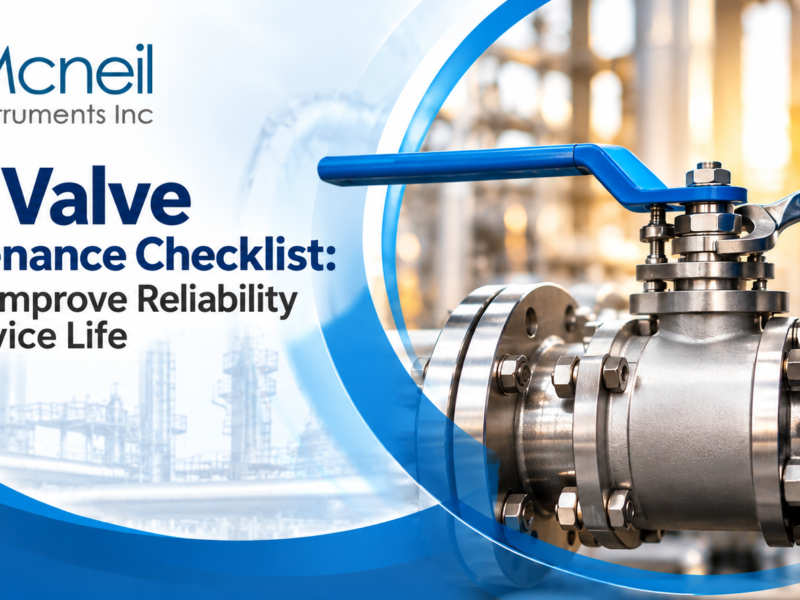
Ball valves are essential components in industrial piping and instrumentation systems because they provide reliable shut-off and efficient flow control. They are widely used in oil and gas, petrochemical, chemical processing, power generation, and other industrial applications. However, continuous operation, pressure fluctuations, temperature variations, and exposure to corrosive fluids can affect their performance over time. Regular ball valve maintenance is essential to ensure operational reliability, minimize unexpected downtime, and extend service life.
At Mcneil Air Header, understanding the importance of reliable instrumentation components helps industries make informed decisions about valve selection, inspection, and maintenance. Following a structured ball valve maintenance checklist can help operators identify potential problems early and maintain consistent system performance.
Conduct Regular Visual Inspections
Visual inspection is one of the simplest and most effective ways to identify potential ball valve problems. Inspect the valve body, connections, stem, handle, and surrounding piping for visible damage, corrosion, loose fasteners, or signs of leakage.
Check threaded, flanged, and other connections for signs of fluid escaping. Pay particular attention to the valve stem and body joints, as damaged seals or worn packing can cause leakage. Any visible abnormalities should be evaluated before they develop into more serious operational issues.
Maintenance tip: Establish an inspection schedule based on operating conditions, valve criticality, and manufacturer recommendations.
Check for Leakage
Leakage is a common issue in industrial ball valves. It can occur externally around the stem or body connections, or internally when the valve fails to provide an effective shut-off.
External leakage may result from damaged seals, loose connections, worn stem packing, or corrosion. Internal leakage can be associated with damaged seats, contamination, wear, or damage to the ball surface.
To identify leakage, inspect the valve during normal operating conditions using approved plant procedures. If a valve fails to isolate the flow properly, investigate the cause and arrange repairs or replacement as required.
Maintenance tip: Never attempt to tighten, dismantle, or repair a pressurized valve unless the procedure is specifically permitted by the manufacturer and applicable safety requirements.
Inspect Valve Operation and Movement
A properly functioning ball valve should operate smoothly within its designed operating range. Stiff movement, excessive operating force, unusual noise, or incomplete opening and closing may indicate a problem.
Possible causes include debris accumulation, corrosion, seat damage, incorrect installation, or problems with the actuator. For manually operated valves, inspect the handle and stem for damage. For automated valves, examine the actuator, control connections, and position indicators.
Do not force a stuck valve, as excessive force can damage internal components or the operating mechanism.
Maintenance tip: Operate the valve according to the manufacturer’s instructions and confirm that its movement is appropriate for the specific application.
Examine Seals, Seats, and Stem Packing
Seals and seats play a critical role in preventing leakage and maintaining effective shut-off. Over time, these components can deteriorate due to pressure, temperature, chemical exposure, friction, and repeated operation.
Inspect the valve seats, stem packing, and other sealing components whenever maintenance procedures require internal examination. Replace damaged or worn components with compatible parts recommended by the valve manufacturer.
Material compatibility is especially important in applications involving aggressive chemicals, high temperatures, or elevated pressures. The selected sealing material must suit the process fluid and operating conditions.
Maintenance tip: Use the correct replacement parts and follow the manufacturer’s specified assembly and tightening procedures.
Check for Corrosion and Material Damage
Industrial ball valves may operate in environments where moisture, chemicals, salt, and aggressive process fluids can cause corrosion. Corrosion can weaken valve components, damage sealing surfaces, and affect operational reliability.
Inspect accessible external surfaces for rust, pitting, discoloration, and other signs of deterioration. Where appropriate, verify that the valve body, ball, stem, and sealing materials are suitable for the operating environment.
Stainless steel ball valves may be appropriate for many corrosive environments, but the correct material depends on the fluid composition, temperature, concentration, and other service conditions.
Maintenance tip: Select valve materials based on the process requirements rather than relying on material grade alone.
Monitor Operating Pressure and Temperature
Operating conditions have a direct impact on ball valve performance. Excessive pressure, temperature fluctuations, pressure surges, or operation outside the valve’s rated limits can damage seats, seals, and other internal components.
Regularly verify that the valve is operating within its specified pressure and temperature ratings. Consider the pressure-temperature limits of the complete valve assembly, including the body material, seats, seals, end connections, and any actuator.
If the operating conditions change, review the valve specification to confirm its continued suitability.
Maintenance tip: Refer to the manufacturer’s pressure-temperature ratings and applicable engineering standards before changing operating conditions.
Keep the Valve and Surrounding Area Clean
Dirt, dust, scale, and other contaminants can affect valve operation, particularly in systems where cleanliness is essential. External contamination may also make it harder to identify corrosion, leakage, or physical damage.
Keep the accessible external surfaces clean using methods compatible with the valve materials and site safety procedures. Where the process permits, ensure that suitable filtration and contamination-control measures are in place to reduce the risk of debris entering the valve.
Do not introduce cleaning agents or lubricants into the valve unless they are approved for the specific design and application.
Maintenance tip: Follow the manufacturer’s cleaning instructions and avoid materials that could damage seals or contaminate the process fluid.
Verify Actuator and Connection Performance
Automated ball valves depend on properly functioning actuators, position indicators, control systems, and mechanical connections. Problems with these components can prevent the valve from reaching its intended position.
Inspect the actuator mounting, electrical or pneumatic connections, control signals, and position feedback according to the equipment manufacturer’s procedures. Confirm that the valve opens and closes correctly during authorized functional testing.
For pneumatic actuators, check the air supply and associated connections. For electric actuators, inspect the relevant electrical connections and control settings using qualified personnel.
Maintenance tip: Include actuator checks in the preventive maintenance schedule for automated valves.
Follow Safe Maintenance Procedures
Ball valve maintenance must be performed with safety as the priority. Before dismantling a valve or carrying out internal repairs, isolate the relevant equipment, depressurize the system, drain or purge the process fluid as appropriate, and follow the site’s lockout/tagout procedures.
Additional precautions may be necessary when handling toxic, flammable, corrosive, or high-temperature fluids. Only trained personnel should perform maintenance tasks appropriate to their qualifications and the equipment involved.
After maintenance, follow the specified inspection and testing procedures before returning the valve to service. Verify that the valve is correctly assembled and that the system can be safely operated.
Maintenance tip: Never assume a valve is safe to dismantle simply because it appears to be in the closed position.
Maintain Inspection and Service Records
Accurate maintenance records help identify recurring problems and improve long-term equipment reliability. Record inspection dates, leakage observations, operating issues, replacement parts, repairs, and functional test results.
These records can help maintenance teams identify patterns such as repeated seat damage, corrosion, actuator failures, or premature seal deterioration. This information can also support decisions about maintenance intervals, spare parts, and valve replacement.
Maintenance tip: Use a maintenance log or computerized maintenance management system to track valve condition and service history.
Ball Valve Maintenance Checklist
Use the following checklist as a starting point for your preventive maintenance program:
Inspect the valve body, stem, handle, and connections for visible damage.
Check for external leakage around the stem, body joints, and connections.
Verify that the valve opens and closes correctly.
Investigate stiffness, unusual noise, or excessive operating force.
Examine seals, seats, and stem packing when required by the maintenance procedure.
Check for corrosion, pitting, and material deterioration.
Confirm that pressure and temperature remain within the specified operating limits.
Inspect actuator connections and position indicators where applicable.
Keep external surfaces clean and control process contamination where possible.
Replace worn components using manufacturer-approved parts.
Follow isolation, depressurization, and lockout/tagout procedures before servicing.
Record inspection results, repairs, and replacement activities.
The inspection frequency should be determined by valve criticality, operating conditions, process hazards, manufacturer guidance, and applicable regulations. Valves used in demanding or safety-critical applications may require more frequent inspections and specialized testing.
Common Ball Valve Problems and Their Preventive Measures
Valve leakage: Inspect sealing components and connections, identify the source of leakage, and replace damaged parts where necessary.
Stiff valve operation: Investigate contamination, corrosion, actuator problems, or internal wear. Avoid forcing the valve.
Incomplete shut-off: Examine the valve seats and ball for damage or contamination and verify that the valve is suitable for the application.
Corrosion: Review material compatibility and operating conditions, and replace components that no longer meet service requirements.
Actuator malfunction: Inspect the actuator, supply connections, control signals, and position feedback according to the manufacturer’s instructions.
Identifying these issues early can help reduce unplanned shutdowns, prevent secondary equipment damage, and improve the reliability of industrial flow-control systems.
How to Extend the Service Life of Industrial Ball Valves
Extending ball valve service life requires the right combination of valve selection, installation, operation, and maintenance. Choose a valve with suitable body and sealing materials, pressure and temperature ratings, connection type, and operating characteristics.
Avoid operating the valve outside its design limits. Follow the manufacturer’s installation instructions, prevent unnecessary mechanical stress on the valve and connected piping, and use preventive maintenance procedures appropriate to the process.
It is also important to understand the intended function of the valve. Standard shut-off ball valves should generally be used in accordance with their specified operating duties. Throttling or flow-control applications require a valve specifically designed and rated for that service.
Working with an experienced industrial instrumentation supplier can help businesses identify suitable valve specifications for their operating requirements.
Conclusion
Regular ball valve maintenance is essential for maintaining reliable flow control, preventing leakage, and improving equipment service life. Visual inspections, leakage checks, operational testing, material assessments, and accurate maintenance records can help industrial facilities identify problems before they lead to unexpected downtime.
For the best results, develop a preventive maintenance plan based on the valve manufacturer’s recommendations, site operating conditions, and the criticality of each application. Selecting the right industrial ball valve and maintaining it correctly can contribute to safer, more efficient, and more reliable industrial operations.
Mcneil Air Header supports industrial instrumentation requirements with products designed for a range of industrial applications. Contact the team to discuss your ball valve and instrumentation component requirements.
Looking for reliable industrial ball valves and instrumentation components?
Mcneil Air Header supports industrial applications with instrumentation products designed to meet varied operating requirements. Contact our team to discuss your requirements and identify suitable solutions for your piping and instrumentation systems.
Frequently Asked Questions (FAQs)
- How often should industrial ball valves be inspected?
Inspection frequency depends on the application, operating conditions, valve criticality, and manufacturer recommendations. Valves in demanding or safety-critical services may require more frequent inspections. - What are the common signs of ball valve failure?
Common warning signs include leakage, stiff operation, incomplete shut-off, corrosion, unusual noise, damaged handles, and actuator malfunction. - Why does a ball valve start leaking?
Leakage may result from worn seats, damaged seals, stem packing deterioration, corrosion, contamination, or loose connections. The cause should be identified before repairs are undertaken. - Can ball valves be repaired instead of replaced?
Some ball valves can be repaired by replacing compatible seals, seats, packing, or other serviceable components. Replacement may be necessary if the valve body or critical internal components are damaged or if repairs are not permitted by the manufacturer. - What materials are commonly used for industrial ball valves?
Common materials include stainless steel, carbon steel, brass, and other alloys. The appropriate choice depends on the process fluid, pressure, temperature, corrosion risk, and applicable specifications. - How can I prevent ball valve leakage?
Select the correct valve for the application, install it according to manufacturer instructions, maintain compatible sealing components, inspect for wear, and avoid operating beyond specified limits. - What safety precautions are required before ball valve maintenance?
Follow the site’s isolation and lockout/tagout procedures, fully depressurize the relevant equipment, and drain or purge hazardous fluids as appropriate. Confirm that the valve is safe to service before dismantling it. - Do ball valves require lubrication?
Not all ball valves require routine lubrication. Follow the manufacturer’s instructions and use only approved lubricants where the valve design permits them. - Can a ball valve be used for flow regulation?
Some ball valves are designed for control applications, but standard shut-off ball valves are generally intended for open-or-closed service. Confirm that the specific valve is rated for throttling before using it to regulate flow. - How does preventive maintenance improve ball valve service life?
Preventive maintenance helps identify leakage, corrosion, wear, and operating problems early. Timely corrective action can reduce unplanned downtime and help extend the service life of suitable valves.