
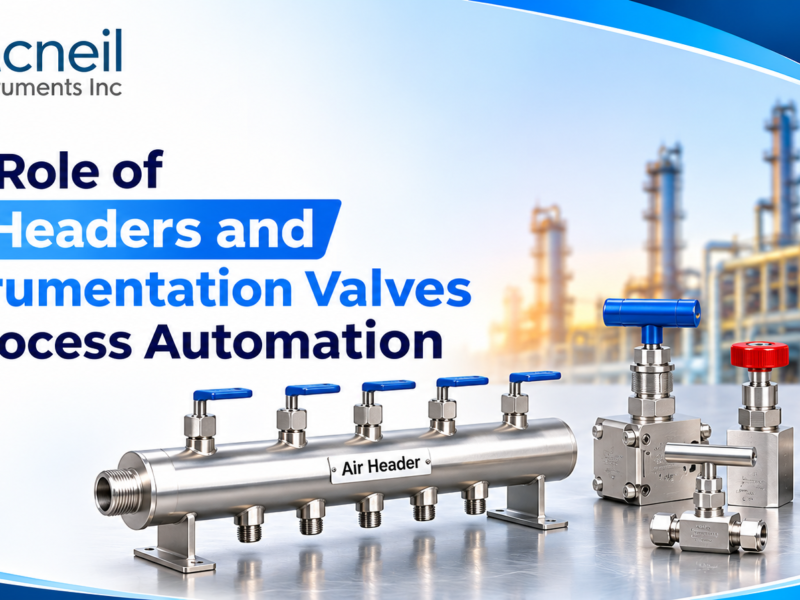
Introduction
Process automation plays a vital role in improving operational efficiency, maintaining safety, and ensuring consistent performance across industrial facilities. From oil and gas plants to chemical processing units and power generation facilities, automated systems rely on accurate measurement, reliable control, and efficient distribution of process signals.
Air headers and instrumentation valves are essential components of these systems. Air headers provide a centralized distribution point for instrument air, while instrumentation valves regulate, isolate, and control the flow of fluids and gases within instrumentation systems.
When integrated into an industrial automation system, these components help maintain reliable instrument operation, support accurate process monitoring, and improve overall plant efficiency.
Mcneil Air Header supplies industrial air headers and instrumentation valves designed to meet the requirements of demanding industrial applications.
Understanding Air Headers in Process Automation
An air header is a distribution manifold designed to supply compressed air from a common source to multiple pneumatic instruments or control devices.
In industrial facilities, instrument air is commonly used to operate pneumatic control valves, actuators, and other automation equipment.
Air headers help distribute this air efficiently while providing individual connection points for different instruments.
Key Functions of Air Headers
Centralized Air Distribution: Air headers distribute instrument air from a common supply line to multiple instruments, reducing the need for separate supply connections.
Improved System Organization: They provide a structured arrangement of instrument air connections, helping simplify installation and maintenance.
Reliable Instrument Operation: Properly designed air headers help maintain a consistent supply of instrument air to connected devices.
Simplified Maintenance: Individual connection points allow technicians to isolate specific instruments when maintenance or inspection is required.
Reduced Installation Complexity: A centralized distribution arrangement can reduce the number of individual piping connections required throughout an instrumentation system.
The Role of Instrumentation Valves in Process Automation
Instrumentation valves are used to control, isolate, and regulate the flow of fluids and gases within industrial measurement and control systems.
They are commonly installed in pressure measurement lines, instrument air systems, process sampling arrangements, and other instrumentation applications.
Their primary purpose is to support accurate measurement, reliable process control, and safe maintenance operations.
Key Functions of Instrumentation Valves
Flow Regulation: Instrumentation valves help control the flow of fluids and gases within process systems.
Instrument Isolation: They allow instruments to be isolated from process lines during maintenance, calibration, or replacement.
Pressure Control: Suitable valve arrangements help manage pressure within instrumentation systems.
Leak Prevention: Properly selected and installed valves help minimize leakage and maintain system integrity.
Measurement Accuracy: Reliable valve operation supports accurate pressure measurement and dependable instrument performance.
Types of Instrumentation Valves Used in Automation
Different types of instrumentation valves are selected according to the application, pressure requirements, and operating conditions.
- Needle Valves
Needle valves are designed for precise flow regulation in instrumentation systems.
Their fine adjustment capability makes them suitable for applications involving pressure measurement, sampling, and controlled flow. - Ball Valves
Ball valves provide quick shut-off and reliable isolation.
They are commonly used in instrument air systems and process connections where efficient flow isolation is required. - Manifold Valves
Manifold valves combine multiple valve functions into a compact arrangement.
They are commonly used with pressure transmitters and differential pressure instruments to support isolation, equalization, and venting. - Check Valves
Check valves allow flow in one direction while preventing reverse flow.
They help protect instrumentation systems from unwanted backflow and support reliable operation.
How Air Headers and Instrumentation Valves Work Together
Air headers and instrumentation valves perform complementary functions in industrial automation systems.
Air headers distribute instrument air to pneumatic devices, while instrumentation valves control and isolate flow within the associated instrumentation arrangements.
For example, in a process plant, a centralized air header may supply compressed air to several pneumatic control valves.
Instrumentation valves installed at individual connections allow technicians to isolate equipment for inspection, maintenance, or troubleshooting.
This arrangement helps maintain reliable instrument operation while simplifying maintenance activities.
Example: Instrument Air Distribution System
A typical instrument air distribution system includes:
A compressed air supply system.
An air header that distributes air to multiple instruments.
Individual isolation valves for connected equipment.
Pneumatic actuators and control valves.
Pressure monitoring instruments to verify system performance.
When these components are properly selected and installed, they support efficient air distribution and dependable operation of automated equipment.
Benefits of Air Headers and Instrumentation Valves in Process Automation
Improved Operational Efficiency
Centralized air distribution and reliable valve operation help reduce unnecessary interruptions and support consistent instrument performance.
Enhanced Maintenance Accessibility
Air headers and instrumentation valves provide convenient connection and isolation points, helping technicians perform maintenance more efficiently.
Better Process Control
Reliable instrument air supply and accurate instrumentation support effective monitoring and control of industrial processes.
Increased System Reliability
Properly selected components help reduce leakage, maintain stable operation, and improve the reliability of automated systems.
Improved Plant Safety
Suitable isolation arrangements allow instruments and equipment to be safely separated from process systems during maintenance and inspection.
Applications Across Industrial Sectors
Air headers and instrumentation valves are widely used in industries that depend on accurate measurement and automated process control.
Oil and Gas: Used in refineries, gas processing facilities, and pipeline instrumentation systems.
Petrochemical Industry: Support instrument air distribution and process measurement in chemical production facilities.
Power Generation: Used in boiler instrumentation, steam systems, and pneumatic control applications.
Chemical Processing: Help maintain reliable control of fluids, gases, and process conditions.
Water and Wastewater Treatment: Support pneumatic actuators and instrumentation used in automated treatment systems.
Selecting the Right Air Headers and Instrumentation Valves
Choosing suitable components is essential for ensuring reliable performance in process automation systems.
Important considerations include:
Operating Pressure: Confirm that the components are suitable for the system’s operating pressure.
Temperature Requirements: Select materials and valve configurations appropriate for the operating temperature.
Material Compatibility: Consider the fluid or gas being handled and its potential effect on the component materials.
Connection Type: Verify that connections are compatible with the existing instrumentation and piping arrangement.
Maintenance Requirements: Choose configurations that allow convenient inspection, isolation, and replacement.
Industry Standards: Ensure that the components meet applicable technical specifications and project requirements.
Proper selection helps improve system reliability, reduce maintenance requirements, and support long-term operational performance.
Why Choose Mcneil Air Header?
Mcneil Air Header provides industrial air headers and instrumentation valves for applications across oil and gas, petrochemical, power generation, and other process industries.
Our product range supports industrial facilities that require reliable instrument air distribution and dependable instrumentation connections.
Whether your application requires air headers, needle valves, ball valves, or other instrumentation components, selecting the right equipment is essential for maintaining process efficiency and operational reliability.
Mcneil Air Header helps industrial buyers identify suitable products according to their technical and application requirements.
Conclusion
Air headers and instrumentation valves are essential components of modern process automation systems.
Air headers provide centralized distribution of instrument air, while instrumentation valves support flow regulation, equipment isolation, and reliable measurement.
Together, these components help improve operational efficiency, simplify maintenance, and support dependable process control across industrial facilities.
Selecting the appropriate air headers and instrumentation valves according to operating conditions and technical requirements is essential for maintaining long-term system performance.
Looking for reliable air headers and instrumentation valves for your process automation requirements?
Contact Mcneil Air Header today to discuss your application, operating conditions, and product specifications.
Choose dependable instrumentation solutions designed to support efficient process control and reliable industrial operations.
Frequently Asked Questions (FAQs)
- What is an air header in process automation?
An air header is a distribution manifold that supplies compressed instrument air from a common source to multiple pneumatic instruments and control devices. - What is the main function of instrumentation valves?
Instrumentation valves regulate, isolate, and control the flow of fluids and gases within industrial measurement and control systems. - How do air headers improve process automation?
Air headers provide centralized instrument air distribution, reduce installation complexity, and help maintain a reliable supply of compressed air to connected instruments. - What types of instrumentation valves are commonly used in automation systems?
Common types include needle valves, ball valves, manifold valves, and check valves. The appropriate type depends on the application and operating requirements. - Why are needle valves used in instrumentation systems?
Needle valves provide precise flow regulation and are commonly used in pressure measurement, sampling, and other applications requiring controlled flow. - What is the difference between an air header and an instrumentation valve?
An air header distributes compressed air to multiple instruments, while an instrumentation valve controls or isolates flow within an instrumentation system. - Which industries use air headers and instrumentation valves?
These components are commonly used in oil and gas, petrochemical processing, power generation, chemical manufacturing, and water treatment facilities. - How do instrumentation valves support plant safety?
Instrumentation valves allow equipment to be isolated during maintenance, helping technicians inspect, calibrate, or replace instruments while reducing exposure to process fluids and gases.