
Introduction
Modern industrial facilities depend heavily on accurate pressure measurement and process control systems. Whether operating in power plants, refineries, petrochemical complexes, LNG terminals, offshore platforms, or chemical processing facilities, maintaining precise instrumentation readings is essential for operational safety and efficiency.
However, steam and high-temperature process lines often create a challenge for pressure instruments. Condensation, temperature fluctuations, and direct exposure to hot process fluids can damage sensitive instrumentation equipment and lead to inaccurate readings.
This is where Condensate Pots become an indispensable component.
Designed to protect pressure transmitters, gauges, differential pressure instruments, and control systems, Condensate Pots help maintain a constant condensate barrier between the process line and instrumentation equipment. Their ability to improve measurement accuracy and extend instrument life makes them a vital part of modern industrial infrastructure.
Today, Condensate Pots are widely used across industries where steam, high-pressure fluids, and elevated temperatures are present.
What Is a Condensate Pot?
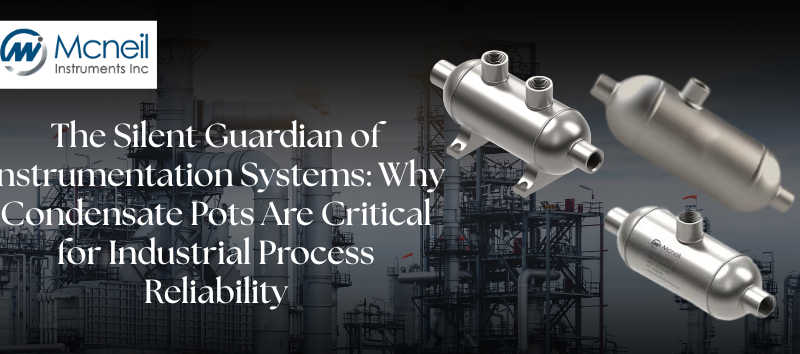
A Condensate Pot is a pressure-retaining vessel installed in impulse lines between a process pipeline and instrumentation equipment.
Its primary purpose is to collect and retain condensate, creating a stable liquid column that protects instruments from direct contact with high-temperature process fluids.
Condensate Pots are commonly installed in:
• Steam Systems
• Boiler Applications
• Power Generation Facilities
• Refineries
• Petrochemical Plants
• LNG Facilities
• Chemical Processing Units
These devices ensure accurate pressure measurement while protecting expensive instrumentation equipment.
Why Condensate Pots Are Important
Industrial instrumentation systems must deliver precise readings under demanding operating conditions.
Condensate Pots help achieve this by:
• Protecting pressure instruments
• Maintaining measurement accuracy
• Preventing temperature damage
• Reducing instrument maintenance
• Improving process reliability
• Extending equipment lifespan
Without Condensate Pots, pressure instruments exposed directly to steam and hot fluids can suffer reduced performance and premature failure.
How Condensate Pots Work
The operation of a Condensate Pot is simple yet highly effective.
When installed in an impulse line:
- Steam enters the system.
- Condensation forms naturally within the impulse piping.
- The condensate collects inside the Condensate Pot.
- A stable liquid barrier is maintained.
- Pressure instruments are protected from direct exposure to high temperatures.
This process ensures consistent pressure transmission while reducing thermal stress on instrumentation equipment.
Key Benefits of Condensate Pots
Improved Instrument Protection
Pressure transmitters and gauges are often sensitive to elevated temperatures.
Condensate Pots provide:
• Thermal protection
• Reduced equipment stress
• Improved reliability
Enhanced Measurement Accuracy
A stable condensate level helps maintain consistent pressure transmission.
Benefits include:
• Accurate pressure readings
• Improved process control
• Reduced calibration issues
Extended Equipment Life
By protecting instrumentation systems from excessive heat exposure, Condensate Pots help:
• Reduce wear and tear
• Lower maintenance costs
• Increase operational lifespan
Improved Process Safety
Reliable instrumentation contributes directly to plant safety.
Condensate Pots help prevent:
• Instrument failure
• Incorrect process readings
• Operational disruptions
Types of Condensate Pots
Different industrial applications require different configurations.
Standard Condensate Pots
Most commonly used in steam and pressure measurement systems.
Applications
• Boilers
• Steam Pipelines
• Power Plants
Vertical Condensate Pots
Designed for installations where vertical orientation is preferred.
Benefits
• Space-efficient installation
• Consistent condensate collection
Horizontal Condensate Pots
Suitable for horizontal piping arrangements.
Applications
• Process Plants
• Refineries
• Instrumentation Systems
High Pressure Condensate Pots
Engineered for demanding pressure conditions.
Features
• Enhanced wall thickness
• Superior pressure capability
• Long-term durability
Materials Used in Condensate Pots
Material selection plays a crucial role in ensuring long-term performance.
Stainless Steel Condensate Pots
Most widely used due to corrosion resistance and durability.
Available Grades
• SS 304 Condensate Pots
• SS 304L Condensate Pots
• SS 316 Condensate Pots
• SS 316L Condensate Pots
Applications
• Chemical Plants
• Offshore Facilities
• Steam Systems
Carbon Steel Condensate Pots
Economical solutions for general industrial applications.
Applications
• Utility Systems
• Power Plants
• Industrial Steam Networks
Alloy Steel Condensate Pots
Designed for elevated temperature and pressure environments.
Applications
• Refineries
• Petrochemical Facilities
• Power Generation Plants
Industries That Depend on Condensate Pots
Power Generation Industry
Used extensively in:
• Boilers
• Steam Systems
• Turbine Installations
• Heat Recovery Units
Oil & Gas Industry
Supports:
• Refineries
• Processing Facilities
• Pressure Measurement Systems
Petrochemical Industry
Provides reliable instrumentation protection in high-temperature environments.
LNG Industry
Used in:
• Process Control Systems
• Pressure Monitoring Applications
Chemical Processing Industry
Protects instrumentation exposed to demanding process conditions.
Marine and Offshore Industry
Ensures dependable operation of pressure monitoring systems in harsh environments.
Installation Advantages of Condensate Pots
Proper installation provides several benefits:
• Balanced pressure measurement
• Reduced thermal impact on instruments
• Stable condensate retention
• Improved instrument response
• Enhanced operational efficiency
These advantages contribute to more reliable process control systems.
Technical Specifications
| Parameter | Specification |
| Product | Condensate Pot |
| Material | SS 304, SS 316, Carbon Steel, Alloy Steel |
| Connection Type | Socket Weld, Threaded, Flanged |
| Orientation | Vertical & Horizontal |
| Pressure Rating | As Per Project Requirement |
| Applications | Steam, Boiler, Instrumentation Systems |
Quality Assurance and Testing
Every Condensate Pot undergoes rigorous quality inspections including:
• Hydrostatic Testing
• Pressure Testing
• PMI Testing
• Dimensional Inspection
• Material Verification
• Weld Inspection
These procedures ensure compliance with international standards and dependable field performance.
Why Condensate Pots Continue to Be Essential
As industries continue investing in:
• Power Generation Projects
• Petrochemical Expansion
• LNG Infrastructure
• Offshore Developments
• Refinery Upgrades
• Industrial Automation
the need for reliable instrumentation protection systems continues to grow.
Condensate Pots remain one of the simplest yet most effective solutions for improving measurement accuracy and protecting critical instrumentation assets.
Conclusion
While often overlooked, Condensate Pots play a crucial role in maintaining the safety, reliability, and efficiency of industrial process systems.
By protecting pressure instruments from high temperatures and ensuring accurate pressure transmission, they help facilities improve performance, reduce maintenance costs, and extend equipment life.
From power plants and refineries to LNG facilities and offshore platforms, Condensate Pots continue to serve as a vital component of modern industrial instrumentation systems.