
Introduction
In modern process industries, the accuracy and reliability of pressure measurement systems are critical for maintaining safe and efficient plant operations. Industries such as power generation, oil & gas, petrochemicals, refineries, fertilizer plants, pharmaceuticals, and chemical processing rely on precise pressure monitoring to control complex industrial processes.
However, one common challenge in steam and high-temperature applications is the presence of condensate. If condensate reaches pressure transmitters, gauges, differential pressure instruments, or other sensitive equipment directly, it can lead to inaccurate readings, equipment damage, corrosion, and premature failure.
This is where Condensate Pots play a vital role.
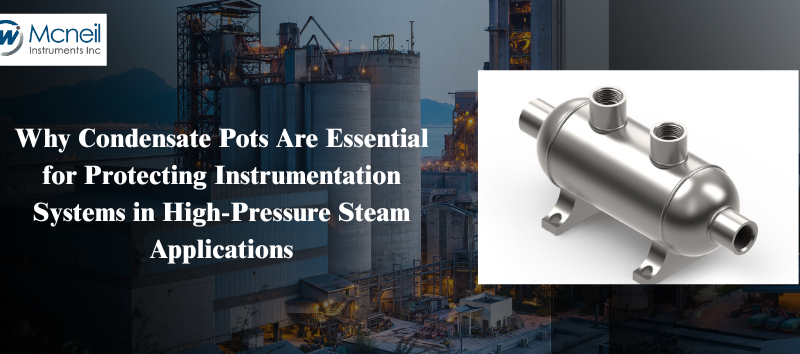
A Condensate Pot is designed to collect and retain condensate before it enters pressure measuring instruments, creating a stable liquid barrier that protects instrumentation while ensuring accurate pressure measurement.
Mcneil Air Header manufactures premium-quality Condensate Pots engineered to deliver dependable performance in demanding industrial environments. Designed according to international standards, these condensate pots are widely used in steam services, process plants, and high-pressure instrumentation systems.
In short: if your plant runs saturated or superheated steam above roughly 180°C, a properly sized condensate pot for steam service is not optional equipment — it is a safeguard for every transmitter downstream.
What Is a Condensate Pot?
A condensate pot (also called a condensate chamber or steam pot) is a small vessel installed in the impulse piping between a steam or high-temperature process line and a pressure-measuring instrument — like a pressure transmitter, gauge, or differential pressure (DP) instrument.
Why it’s needed
In steam and high-temperature applications, hot steam flowing directly into a pressure instrument would damage it — thermal stress, inaccurate readings, and premature failure are common problems. A condensate pot solves this by letting steam cool and condense into liquid before it reaches the instrument.
How it works
Steam or hot process fluid enters the impulse line.
As it reaches the pot, it cools and condenses into liquid.
The condensate collects and stays trapped inside the vessel, forming a stable liquid column.
Pressure is transmitted to the instrument through that liquid column — not through direct steam contact.
This creates a thermal and physical buffer: the instrument only “feels” pressure through a cool, stable liquid, never the hot steam itself.
Key benefits
Protects instruments from direct high-temperature exposure
Improves measurement accuracy — especially for DP instruments, where equal condensate levels on both impulse legs prevent reading errors
Reduces thermal shock and stress, extending instrument life
Lowers maintenance and failure rates
Improves plant safety through more stable, reliable readings
Common materials: stainless steel (304/304L/316/316L), carbon steel, and alloy steel — chosen based on temperature, pressure, and corrosion exposure.
Common connection types: threaded, socket weld, butt weld, and flanged — with socket/butt weld typically preferred for higher-pressure steam service.
Where they’re used: power plants (boilers, turbines), oil & gas, petrochemical, refineries, fertilizer, pharmaceutical, and pulp & paper industries — anywhere steam or hot process fluid feeds a pressure instrument.
Why Condensate Pots Are Important
Without proper condensate management, instrumentation systems may experience:
Measurement errors
Instrument overheating
Pressure imbalance
Thermal shock
Equipment damage
Increased maintenance
Unplanned shutdowns
Installing a properly designed condensate pot significantly improves system stability and measurement accuracy.
Mcneil Air Header – Trusted Manufacturer of Condensate Pots
Mcneil Air Header manufactures precision-engineered condensate pots suitable for demanding industrial applications.
The product range includes:
Stainless Steel Condensate Pots
Carbon Steel Condensate Pots
Alloy Steel Condensate Pots
High Pressure Condensate Pots
Threaded Condensate Pots
Socket Weld Condensate Pots
Butt Weld Condensate Pots
Flanged Condensate Pots
Each product is manufactured using premium materials and strict quality control procedures to ensure dependable performance in industrial instrumentation systems.
How Does a Condensate Pot Work?
A condensate pot is installed within the impulse piping of a pressure measurement system.
The operating principle is simple:
Steam or process fluid enters the impulse line.
Steam naturally cools and forms condensate.
The condensate collects inside the condensate pot.
The liquid remains trapped inside the vessel.
Pressure is transmitted through the stable liquid column to the measuring instrument.
This protects the instrument from direct exposure to high-temperature steam while maintaining accurate pressure readings.
Advantages of Using Condensate Pots
Protects Pressure Instruments
Condensate pots prevent direct exposure of transmitters and gauges to high-temperature steam.
Improves Measurement Accuracy
Maintaining equal condensate levels on both impulse lines minimizes differential pressure errors.
Prevents Thermal Damage
Sensitive instrumentation remains isolated from excessive process temperatures.
Reduces Maintenance Costs
Protection against overheating and contamination extends equipment life.
Enhances Plant Safety
Stable pressure measurement improves process control and operational safety.
Extends Instrument Life
Pressure transmitters and gauges experience significantly lower thermal stress.
Materials Used in Condensate Pots
Stainless Steel Condensate Pots
Common Grades
Stainless Steel 304
Stainless Steel 304L
Stainless Steel 316
Stainless Steel 316L
Advantages
Excellent corrosion resistance
Long service life
Suitable for chemical processing
Ideal for offshore applications
Carbon Steel Condensate Pots
Recommended For
Utility Systems
General Industrial Applications
Steam Distribution
Benefits
High mechanical strength
Cost-effective
Excellent pressure capability
Alloy Steel Condensate Pots
Suitable For
High-Temperature Steam
Boilers
Thermal Power Plants
Refineries
Advantages
Excellent creep resistance
Superior thermal stability
Outstanding pressure performance
Quick Material Selection Guide
Parameter Specification Notes
Product Condensate Pot Also called a pigtail siphon alternative for DP measurement
Materials Stainless Steel (304/304L/316/316L), Carbon Steel, Alloy Steel Select by temperature and corrosion exposure
Connection Types Threaded, Socket Weld, Butt Weld, Flanged Butt weld/flanged preferred above ANSI 600#
Applications Steam service, DP flow, level and pressure instrumentation Especially critical above 180°C process temperature
Industries Oil & Gas, Petrochemical, Power, Chemical, Pharma, Pulp & Paper Any plant running saturated or superheated steam
Standards ASTM / ASME B16.34, B16.5, B31.3 compliant manufacturing Third-party inspection available on request
Types of Condensate Pot Connections
Mcneil Air Header manufactures condensate pots with multiple end connection options.
Threaded Condensate Pots
Ideal for smaller instrumentation systems.
Socket Weld Condensate Pots
Recommended for high-pressure applications.
Butt Weld Condensate Pots
Provide permanent, leak-proof connections.
Flanged Condensate Pots
Suitable for larger industrial piping systems requiring easy maintenance.
Industries Using Condensate Pots
Power Generation
Used in:
Steam Turbines
Boilers
Superheaters
Heat Recovery Systems
Oil & Gas Industry
Supports:
Refineries
Process Units
Steam Pipelines
Offshore Platforms
Petrochemical Industry
Provides accurate pressure measurement in high-temperature process systems.
Chemical Processing
Used for pressure monitoring in aggressive chemical environments.
Fertilizer Industry
Ensures reliable instrumentation in steam and process lines.
Pharmaceutical Industry
Supports controlled process monitoring systems.
Pulp & Paper Industry
Used in steam distribution and process instrumentation.
Technical Features of Mcneil Air Header Condensate Pots
Key features include:
Heavy-duty construction
Corrosion-resistant materials
High-pressure capability
Compact design
Precision welding
Leak-proof performance
Easy installation
Low maintenance
These features make Mcneil Air Header Condensate Pots suitable for demanding industrial service conditions.
Quality Assurance
Every Condensate Pot manufactured by Mcneil Air Header undergoes comprehensive testing including:
Hydrostatic Testing
Pneumatic Testing
Pressure Testing
PMI Testing
Dimensional Inspection
Visual Inspection
Material Traceability Verification
Leak Testing
These inspection procedures ensure dependable performance and compliance with international quality standards.
Installation Tips for Longer Instrument Life
Mount the pot so both impulse legs fill with condensate to the same level, or DP readings will drift.
Insulate the pot and impulse lines in cold climates to prevent freezing of the trapped condensate.
Choose socket weld or butt weld connections above ANSI 600# rather than threaded ends.
Schedule periodic draining and inspection on high-solids or corrosive steam lines.
Why Choose Mcneil Air Header?
Mcneil Air Header is a trusted manufacturer, supplier, exporter, distributor, and stockist of premium instrumentation products.
Customers rely on us for:
Precision-engineered Condensate Pots
Premium material selection
International quality standards
High-pressure manufacturing capability
Custom sizes and configurations
Fast project deliveries
Technical engineering support
Global export capabilities
Our condensate pots are widely used in instrumentation systems where safety, accuracy, and long-term reliability are critical.
Conclusion
Condensate Pots are indispensable components in steam and high-temperature instrumentation systems. By protecting sensitive pressure instruments from excessive heat while maintaining a stable condensate column, they ensure accurate pressure measurement, improve equipment reliability, and reduce maintenance costs.
Whether your project requires Stainless Steel Condensate Pots, Carbon Steel Condensate Pots, Alloy Steel Condensate Pots, Threaded Condensate Pots, Socket Weld Condensate Pots, Butt Weld Condensate Pots, or Flanged Condensate Pots, Mcneil Air Header delivers precision-engineered solutions designed to perform in the most demanding industrial environments.
From power plants and refineries to petrochemical complexes and chemical processing facilities, Mcneil Air Header Condensate Pots continue to provide reliable protection for critical instrumentation systems.
Need help sizing or specifying a condensate pot for your steam system? Contact Mcneil Air Header for a technical recommendation, datasheet, or custom quotation.
Frequently Asked Questions
Which connection type should I choose for high-pressure steam?
Socket weld or butt weld connections are generally recommended for high-pressure steam service, since threaded connections are more prone to leakage under thermal cycling.
What is the difference between a condensate pot and a pigtail siphon?
A pigtail siphon uses a coiled tube to cool and trap condensate for a single impulse line, while a condensate pot is a dedicated vessel that maintains a larger, more stable liquid volume — typically preferred for higher-accuracy DP and high-pressure steam service.
At what temperature is a condensate pot required?
There is no single universal cutoff, but most specifications call for condensate pots on saturated or superheated steam lines once process temperature exceeds roughly 180°C, or per project-specific instrumentation standards.